The valley
Waimea Valley: priests, a botanical garden and the walk to the falls
What Wikipedia and Waimea Valley's own site say about the valley the luau is held in: its history, its gardens and its waterfall.
Choose my Toa Luau night ↗Quick answer
Yes, the valley is worth knowing before you go, because your luau ticket includes entry to it. Waimea Valley's own site calls it a wahi pana, a storied and sacred place, with a paved trail through themed gardens to a waterfall. Wikipedia says the garden holds about 5,000 taxa and that the valley passed from Hawaiian priests through private owners to public and nonprofit management.
Waimea Valley in six facts
| Fact | Detail | Source |
|---|---|---|
| Address | 59-864 Kamehameha Highway, Haleiwa | Wikipedia; the listing |
| Garden | 35 collections, about 5,000 taxa | Wikipedia |
| Length | About 0.75 miles | Wikipedia |
| Themed gardens | 60 along a paved trail | Waimea Valley's site |
| Management since 2008 | Hiipaka LLC, a nonprofit | Wikipedia |
| Closed day | Monday | Waimea Valley's site |
A sacred valley
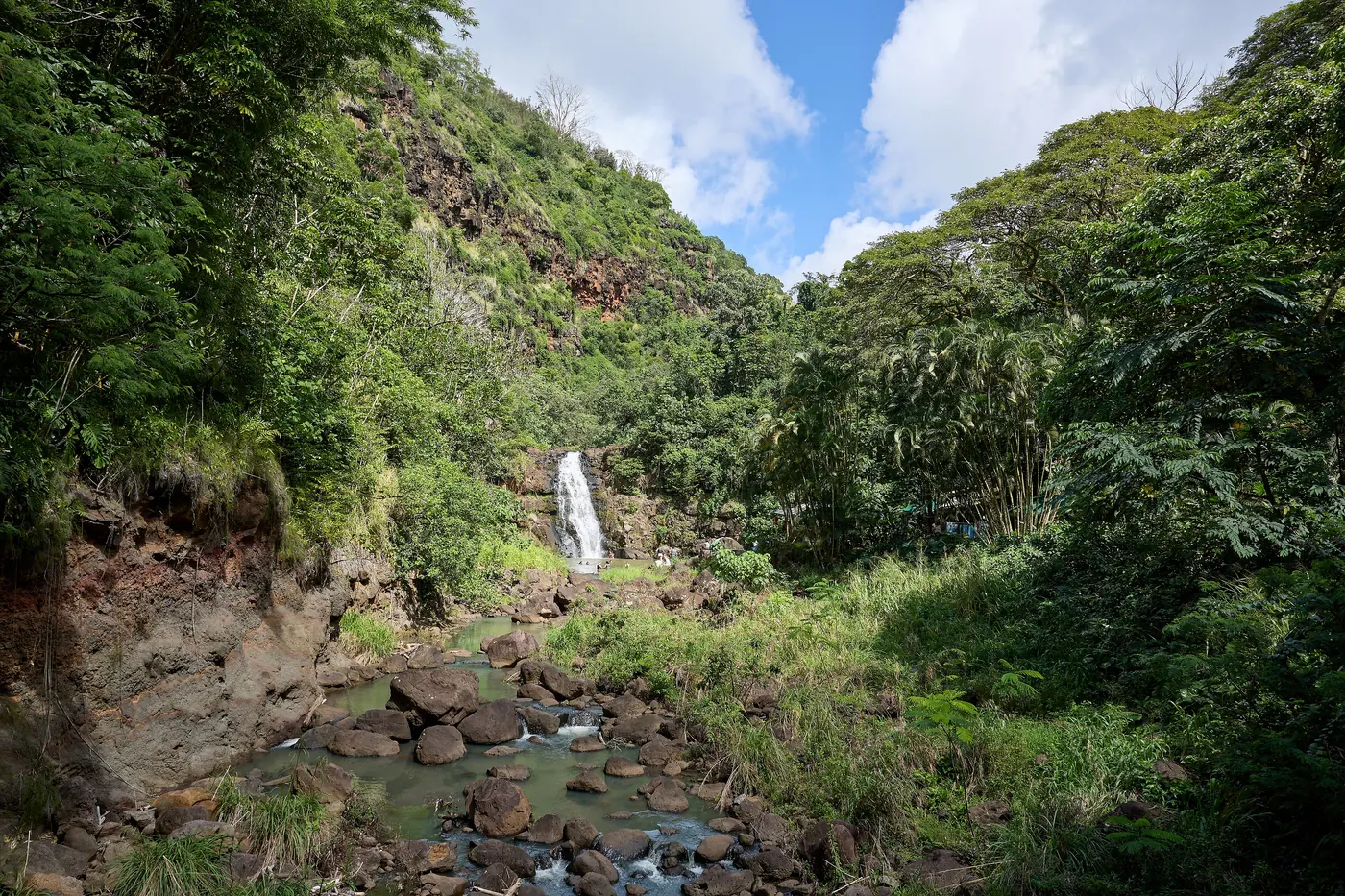
Waimea Valley's own website calls the place a wahi pana, a storied and sacred place where nature, culture and history meet. The Viator listing for the luau uses a similar frame, describing it as a cultural site and botanical paradise and giving it the name Valley of the Priests. The listing puts the area at 1,800 acres with more than 5,000 plant species. Those are the listing's own figures. Wikipedia, which is more cautious, says the garden has 35 collections representing about 5,000 taxa and that the valley is about 0.75 miles long.
The priests
Wikipedia says the valley was given to high priests in 1092 and later became home to the Paao priesthood, and it notes that the article needs better citations, so treat the date as the article's claim rather than settled fact. It says Hewahewa, the kahuna of Kamehameha the Great and a Paao descendant, later turned to Christianity and helped destroy heiau and religious idols. After Hewahewa died in 1837 the valley passed to his granddaughter Paalua.
After the Mahele
According to Wikipedia, Paalua kept her land after the Mahele of 1848 until 1884, when debt led her to mortgage and lease it. After her death in 1886 the property was foreclosed. The article does not trace every owner after that, so this guide stops where the source does. What it does give is the modern line: the City and County of Honolulu managed the garden until 2003, the National Audubon Society took over in 2003, and in 2008 management passed to Hiipaka LLC, a nonprofit created by the Office of Hawaiian Affairs.
Heiau nearby
Wikipedia names two heiau, or temples, connected with the area. Puu o Mahuka was built in the 1700s by Kaopulupulu, and Kupopolo was built under his guidance. Ke Ahu Hapuu, on the southwest side of Waimea Bay, is a shrine to the shark god Kaneaukai. The article does not say whether visitors can reach them, and the luau ticket does not include any of them, so they are background rather than a plan.
The botanical garden
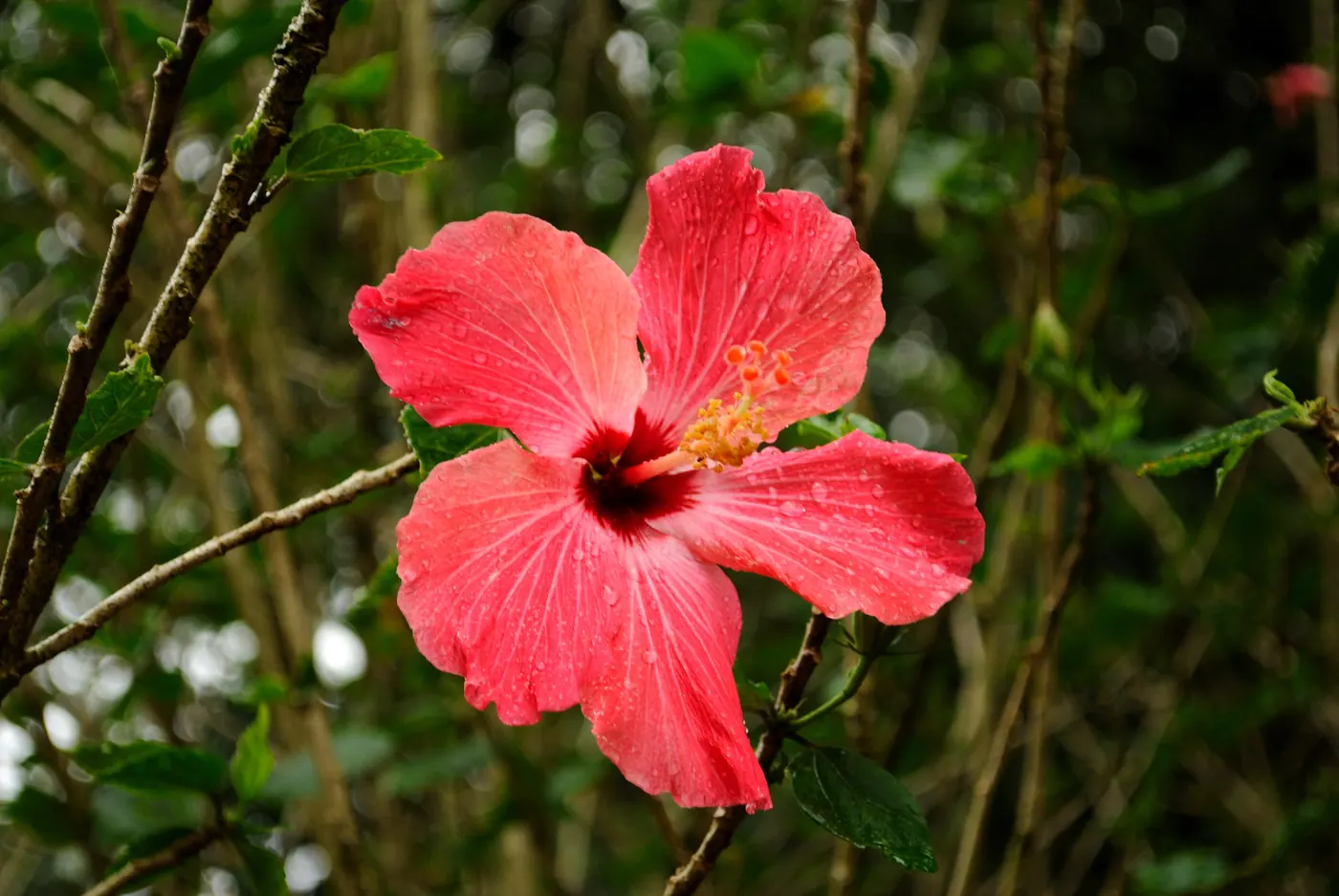
Wikipedia describes a garden of 35 collections representing about 5,000 taxa from around the world: Polynesian plants, rare Hawaiian plants, and gardens of plants from Guam, Madagascar, the Mascarene Islands, the Ogasawara Islands and the Seychelles, with hibiscus, bamboo, ferns and tropical fruit. Waimea Valley's own site counts 60 themed gardens along a fully paved trail. The two counts differ because collections and themed gardens are not the same thing, and both sources are named here so you can see which is which.
The trail to the falls
The paved trail ends at Waimea Falls. Waimea Valley's own site says swimming is allowed when conditions permit, with lifeguards on duty. Wikipedia describes a small waterfall and swimming hole at the back of the valley. If you plan to walk the trail before the luau, the listing advises at least a moderate level of fitness, and the valley is not open on Mondays according to its own site.
Culture in the valley
Beyond the plants, Waimea Valley's site mentions a traditional Hawaiian kauhale, a living complex where visitors can step into the past, plus hula halau, resident artisans and education programmes. Wikipedia explains that a halau is a hula school led by a kumu hula, or teacher. The luau show is separate from these, but the setting is the same.
Opening days
Waimea Valley's tickets and hours page lists the valley as open Tuesday to Sunday and closed on Monday, with Thanksgiving Eve open on shorter hours and Thanksgiving Day closed. It says hours vary by season. Wikipedia's article says open daily except Christmas and New Year's Day, which conflicts, and the valley's own page is the better source. The luau runs on Mondays regardless, according to the listing, with luau guests admitted shortly before check-in.
What a luau adds
Without the luau, the valley is a daytime garden. With it, the evening has a lawn, an oven, a stage and a fire. The listing's schedule starts with check-in, then food preparation and lawn activities, an umu demonstration, the kava ceremony, dinner, the show and a farewell.
A short reading list
If you want to read more before you go, start with Waimea Valley's own pages, then Wikipedia's article on the valley and its articles on luau and kava. They are linked below. Treat anything with a citation warning as a lead to check, and treat the booking page as the final word on what your ticket includes.
Frequently asked questions
Is Waimea Valley included with the luau?
Yes. The listing says entrance to Waimea Valley is included with the luau ticket.
Can I swim at the falls?
Waimea Valley's site says swimming is allowed when conditions permit, with lifeguards on duty.
Is the valley open every day?
Waimea Valley's own page lists it as closed on Mondays. The listing says the luau still runs on Mondays.
Who runs Waimea Valley?
Wikipedia says Hiipaka LLC, a nonprofit created by the Office of Hawaiian Affairs, has managed it since 2008.
How many plants are in the garden?
Wikipedia says about 5,000 taxa in 35 collections.
Sources