The show and the food
Umu, kava and the fire knife: what happens at a luau
Each part of the Toa Luau evening, explained from the listing and from Wikipedia: the rock oven, the kava ceremony, the feast, the island groups and the fire knife.
Choose my Toa Luau night ↗Quick answer
Yes, knowing what each part of a luau is makes the evening richer. Toa Luau's listing names an umu, a kava ceremony, a feast, a Polynesian show of five island groups and fire-knife dancing; Wikipedia explains the oven, the ceremony, the dishes and the dance behind them.
The evening's parts
| Part | What it is | Source |
|---|---|---|
| Umu | A rock or earth oven; imu in Hawaii | The listing; Wikipedia |
| Kava | Root drink, ceremonial across the Pacific | Wikipedia |
| Feast | Luau dishes such as kalua pig | The listing; Wikipedia |
| Show | Hawaii, Tonga, New Zealand, Tahiti, Samoa | The listing |
| Fire knife | Samoan dance with burning towels | Wikipedia |
What a luau is
Wikipedia says the modern name luau comes from luau stew, made with young taro leaves, usually octopus or chicken, and coconut milk. The earliest dated use it cites is 1856, when a newspaper described a luau, or native feast, at the wedding celebration of King Kamehameha IV and Queen Emma. Before that, smaller dinners were called paina and larger feasts ahaaina. It also says tradition holds that in 1819 King Kamehameha II ate with women, ending the kapu that had separated men and women at meals, and that luau parties are said to have begun then.
The umu
The listing mentions an umu demonstration, which is the rock oven. In Hawaii the earth oven is the imu, and Wikipedia describes kalua pig as a whole pig cooked slowly in one. Toa Luau's listing does not say what is cooked in the demonstration at your visit, so treat the kalua pig as background. Wikipedia adds that food at traditional feasts was served on the floor on mats, with large ti-leaf centrepieces and eaten by hand.
The kava ceremony
Kava comes from Piper methysticum, a Pacific plant of the pepper family. The root is ground, stirred into water or coconut milk and strained. Wikipedia says the traditional method strains the mixture into a communal bowl, the drink numbs the mouth, and the word kava comes from Tongan and Marquesan words meaning bitter. It lists ceremonial uses in Fiji, as yaqona, in Samoa as the ava ceremony, in Tonga as Taumafa Kava and in Hawaii as awa.
The feast
The listing names the luau feast but not the menu. Wikipedia lists poi, laulau, lomi salmon and haupia among traditional luau dishes. Poi is made from taro roots, and Wikipedia says its thickness used to be described by fingers: three-finger, two-finger and one-finger. If you have dietary needs, the booking page is the place to raise them.
Hawaii: hula
The listing names Hawaii among the show's five island groups. Wikipedia describes hula as chant with dance, taught in schools called halau. Kahiko is ancient hula accompanied by chant and traditional instruments, and auana developed under Western influence, with guitar, ukulele and double bass. Missionaries who arrived in 1820 condemned hula, Queen Kaahumanu banned public performances in 1830, and King Kalakaua's reign from 1874 to 1891 saw traditional arts encouraged again.
New Zealand: haka
Wikipedia describes a haka as a type of ceremonial dance in Maori culture, performed with vigorous movements, foot-stamping and rhythmic shouting, by both men and women. It says haka welcome guests and mark achievements or funerals, and warns that Maori scholars consider it wrong to think haka are typically war dances. The group performing it is called a kapa haka. The listing does not say what the show's New Zealand section contains.
Tonga, Tahiti and Samoa
The listing names Tonga, Tahiti and Samoa as part of the show. The sources opened for this guide do not describe Toa Luau's items for Tonga or Tahiti, so the programme is best left as a surprise. What the sources do give is Samoa's fire knife, below, and the Tongan kava ceremony called Taumafa Kava.
The fire knife
Wikipedia calls the fire knife a Samoan cultural implement for ceremonial dances, also known as siva afi, and in Samoa as ailao afi. It began as a machete with towels tied at both ends and the centre of the blade bare, and the modern dance descends from ailao, in which a warrior showed his handling of a war club. The towels are set alight, and dancers twirl the knife and perform acrobatic stunts. Wikipedia says an annual world championship has run since 1992 in the third week of May.
Commercial versions
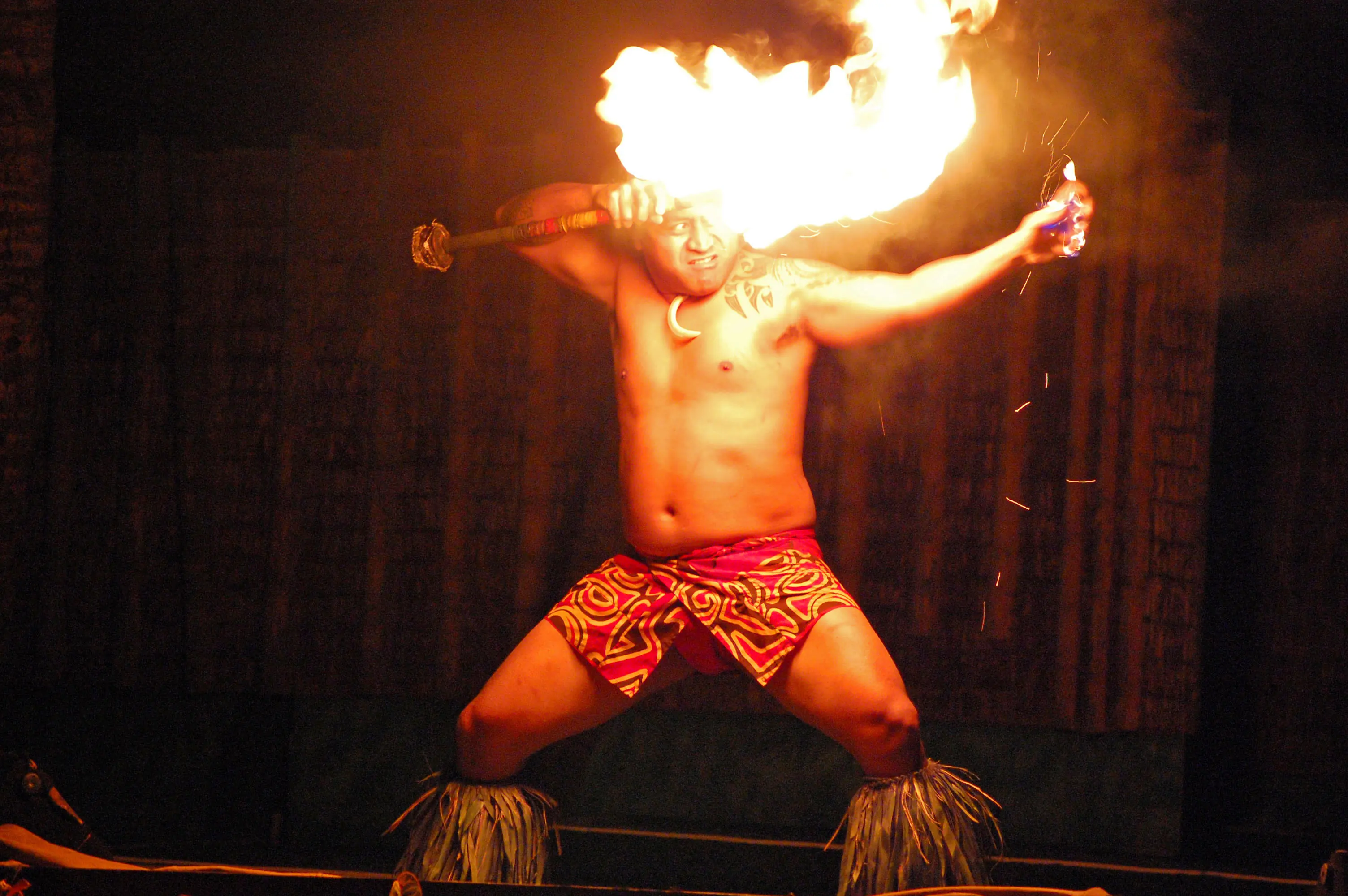
Wikipedia adds that commercial versions today often use wooden or aluminium poles with towels and a short blade or none, and move faster. Whether Toa Luau's version uses a blade is not stated in the sources opened. What the listing does say is that the evening ends with fire-knife dancing.
Putting it together
A luau is a feast, but it is also a sequence of customs from different islands, from the oven to the ceremony to the stage. The listing's order, check-in, food preparation, the umu, the kava, dinner, the show and farewell, follows that logic. Knowing a little of what each part means makes the three hours easier to follow.
Frequently asked questions
What is an umu?
A rock or earth oven. In Hawaii it is called an imu, and Wikipedia describes kalua pig as a whole pig cooked slowly in one.
What does kava taste like?
Wikipedia says it gives an initial numbing and astringent sensation in the mouth, and its name means bitter in Tongan and Marquesan.
What is a fire knife?
A Samoan ceremonial tool, first a machete with towels at each end that are lit. Wikipedia says commercial versions often use poles.
Which islands does the show cover?
The listing says Hawaii, Tonga, New Zealand, Tahiti and Samoa.
Where did the word luau come from?
Wikipedia says from luau stew, made with young taro leaves, with the earliest dated use cited as 1856.
Sources